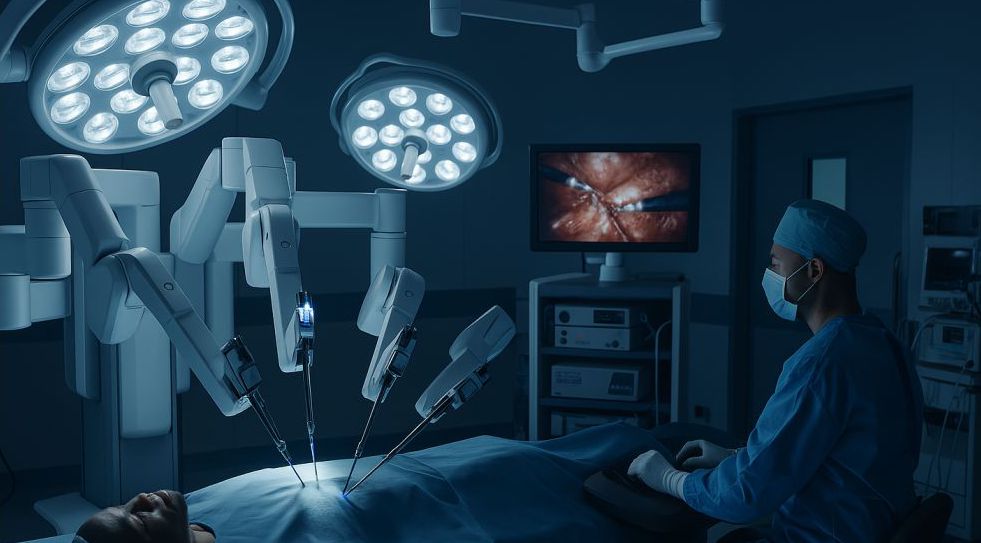
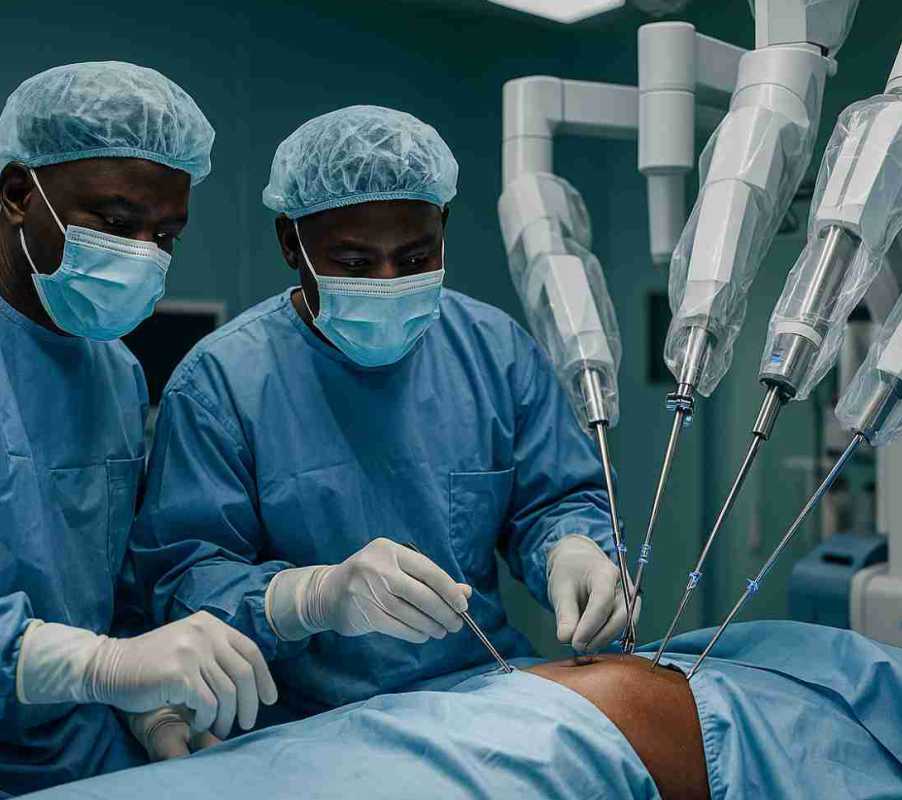
The success of robotic-assisted surgery is not just about having the latest technology—it’s also about having highly trained surgeons who can effectively utilize these advanced systems. Robomed understands this and has developed a comprehensive training program to equip surgeons with the skills they need.
The Importance of Training in Robotic Surgery:
-
Bridging the Knowledge Gap: Many surgeons in West Africa are new to robotic-assisted procedures, making specialized training essential.
-
Hands-On Learning: Training programs allow surgeons to practice on robotic systems before performing real procedures.
-
Continuous Support: Ongoing education ensures surgeons stay updated with the latest advancements.
Robomed’s Training Program:
-
Simulation-Based Learning: Surgeons train on virtual systems before transitioning to real surgical procedures.
-
Live Demonstrations: Training sessions with experienced robotic surgeons provide hands-on guidance.
-
Clinical Validation: Our flagship pilot at Nisa Premier Hospital serves as a benchmark for excellence in robotic surgery training.
Impact on Healthcare Providers & Patients:
-
Surgeons Gain Confidence: Training ensures that robotic surgery is performed safely and effectively.
-
Hospitals Improve Patient Outcomes: Skilled surgeons lead to better results, shorter recovery times, and reduced complications.
-
Patients Receive World-Class Care Locally: Reducing the need for medical tourism and ensuring high-quality treatment at home.
about
Robomed
Robomed Nigeria Limited is at the forefront of a healthcare revolution—bridging technology and clinical expertise to introduce world-class robotic-assisted surgical systems across Nigeria and Anglophone West Africa